Have We Got a Shortage of Bicycle Mechanics — or a Shortage of Bike Shops?
Where are the next generation of bike mechanics going to come from? It’s time to look at the bigger picture.
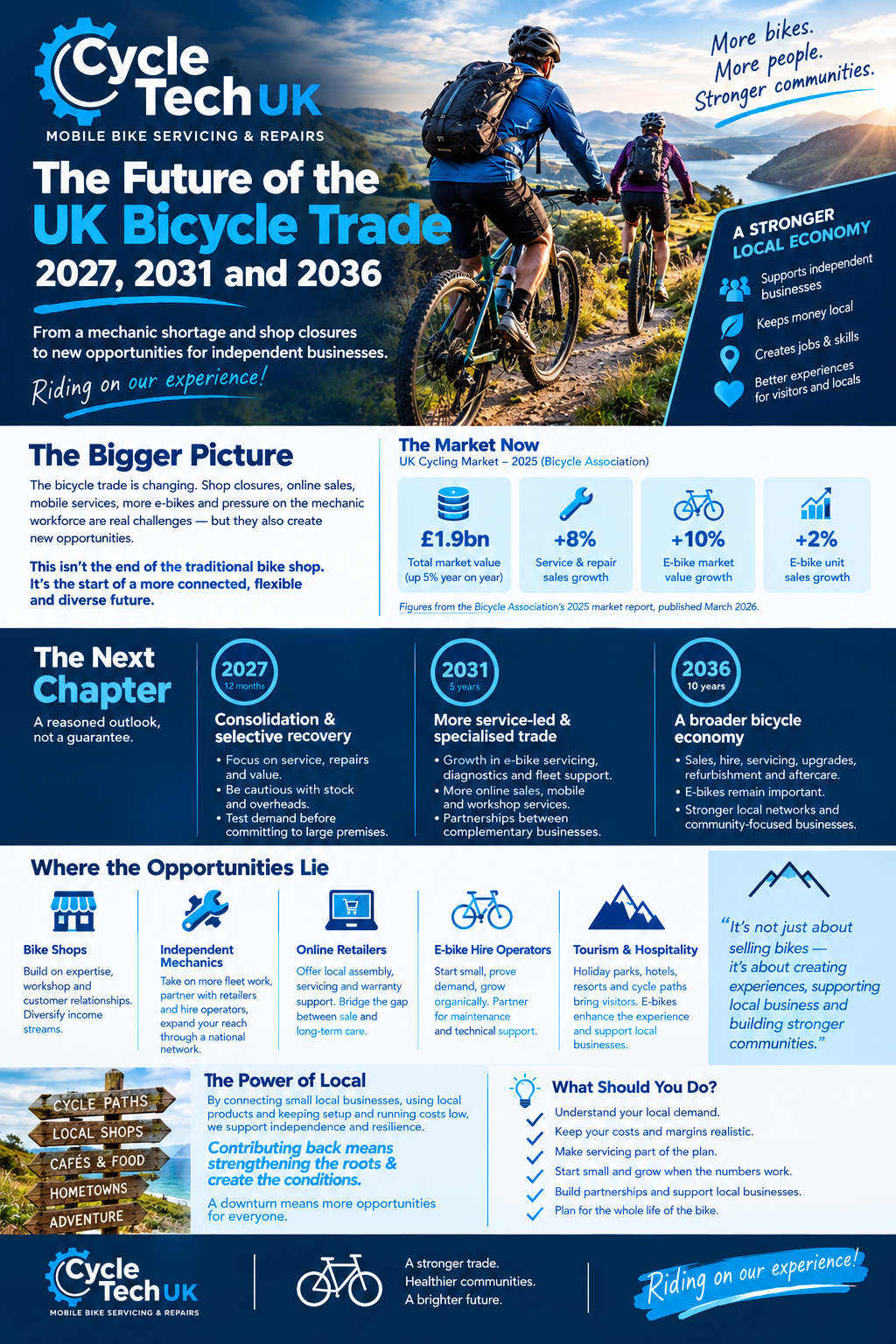
The NextGen Mechanics Report 2026 suggests Europe needs 45,000 more bicycle mechanics today, rising to 105,000 by 2032.
That raises an important question for the UK cycle trade.
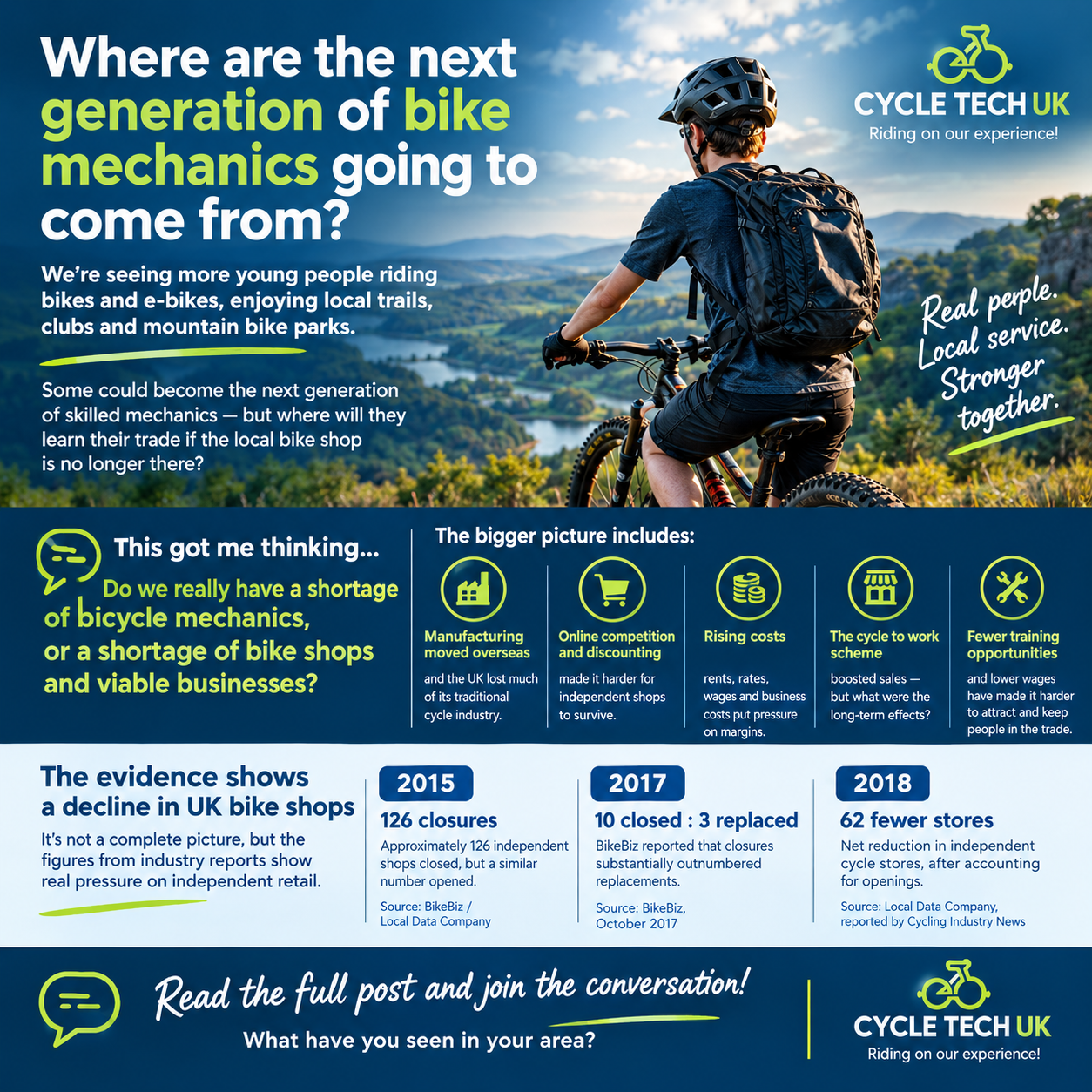
Do we genuinely have a shortage of mechanics, or have we lost too many of the businesses that traditionally employed, trained and developed them?
Having spent more than 30 years working in the cycle and motor trades, and building a network of independent mobile mechanics across the UK, I've seen some significant changes.
What has happened to the traditional bike shop?
Over the past 15 years or more, we've seen independent bike shops close, while other businesses have moved towards online sales, mobile servicing, collect-and-return services and workshop-based models.
There are several reasons worth examining.
- Manufacturing moved overseas. As bicycle production increasingly shifted to Asia, the UK lost much of its traditional manufacturing base. At the same time, the forces shaping the economics of the e-bike marketplace have put manufacturers under growing pressure to cut costs and remain competitive. This has encouraged the development of lower-cost products and, in some cases, compromises in quality, support and aftercare — moving away from long-held principles of craftsmanship and customer care. Not necessarily because manufacturers want to, but because to survive in an increasingly competitive market, they feel they have little choice.
- The internet changed how we buy bikes. Customers can compare hundreds of models and prices, often buying directly from online-only retailers. Independent shops have found themselves competing with businesses that don't carry the same premises, staffing and workshop costs.
- The economics of retail have changed. Rents, business rates, wages, employment costs and parking difficulties have all added pressure. Meanwhile, discounting can leave very little margin to fund a workshop or train the next generation.
- Cycle to Work schemes helped sell bikes. But have we properly examined the long-term consequences for independent retailers, margins, servicing and aftercare? The scheme has benefits for cycling, but selling more bikes doesn't automatically create a sustainable repair network.
- The traditional career path has weakened. Low wages are often cited as a reason mechanics leave or young people don't enter the trade. But we also need to ask how many viable businesses remain to offer them a job, training and a future.
Many established brands have also gone bust, while newer brands from China have grown and, in some cases, improved their products considerably.
But that raises another important question: how do you move forward without reliable manufacturer support, access to technical data, spare parts and warranty backup?
A bike might look good, sell well and offer great value, but what happens when something goes wrong? Can you diagnose the problem, get the parts you need and provide the customer with a proper aftercare service?
In these challenging times, support matters more than ever. It's not just about selling bikes; it's about being able to keep them on the road, look after the customer and build a business that can stand the test of time.
Where Have the Bike Shops Gone?


The UK Bike Shop Closure Trend
Bike shops were among the last independents to feel the squeeze. Online retailers like Wiggle began in 1999 and grew quickly, yet through the 2000s and the 2012 Olympic boom, the UK still had well over 2,000 independent bike shops. The turning point came in the mid-2010s: by 2017, only about three shops were opening for every ten that closed, the worst rate since the 1960s. Rising costs, brands selling direct and online price competition all played a part, and closures continue today. Meanwhile workshops stayed busy, which raises the real question: where will tomorrow’s mechanics learn their trade if the shop has gone?
“Bosch’s first e-bike drive system arrived in 2011, and workshops had to learn new skills” - Bosch opened up training, parts, technical support and a clear warranty procedure, so independent mechanics could keep up.
The decline isn't just anecdotal
Trade publications have reported some telling figures:
📉 2015: Approximately 126 independent cycle shops opened and a similar number closed.
📉 2017: BikeBiz reported that, for every ten bike shops closing, only around three were replacing them.
📉 2018: Local Data Company figures reported a net decline of 62 independent cycle stores.
Sources:
- BikeBiz — Bike shop closure rate at its highest since the 1960s
- Cycling Industry News — UK bike shop numbers and market outlook
- Cycling Industry News — Independent cycle store figures
More recent examples: the pressure on independent bike shops
Alongside the historical figures, more recent reports show that established retailers continue to face difficult trading conditions.
- 2025 — Beeline Bicycles, Oxford: An independent retailer with around 30 years in business entered liquidation amid falling turnover and rising costs. Read the report on road.cc.
- 2026 — Primera Sports, Bournemouth and Poole: The family-run retailer, which had traded for 34 years, ceased trading. The closure was reported amid pressure from operating costs, online competition and weaker consumer spending. Read the report on Cycling Weekly.
- 2025 — Independent workshop businesses: Cycling Industry News examined workshop revenue among independent retailers, highlighting the importance of servicing and repairs to the traditional bike-shop business model. Read the analysis.
A popular York bike shop is closing after 45 years - York Cycleworks
“We offer what the internet can’t. But it’s not enough”: Popular bike shop closing after 45 years, “can no longer compete” with online retailers
“We’re a shop that offers servicing; we’ve got the best workshop and mechanics round here. We offer what the internet can’t, but it’s not enough. We’re still bonkers busy with repairs but it just doesn’t bring us enough money.
Trek [York Cycleworks’ main supplier] have pulled the rug from under our feet. They’re selling to larger retailers who are smashing the prices out of reach for us. We’ve got nothing to support the business.”
— York Cycleworks Closes down Sept 2025 Road CC article
These are historical snapshots, not a complete annual series. We still need better figures showing how many shops have closed, how many have opened, and how the wider repair sector has changed since then.

What about the next generation?
Look at the growth of mountain biking, local trails, riding clubs, cycling groups and dedicated bike parks across the UK.
More young people are discovering bikes and e-bikes, learning new skills and becoming passionate about riding.
Some could become mechanics. Some might start their own businesses. Others could become the next generation of skilled technicians.
But where are they going to learn their trade if the local bike shop that once provided that opportunity no longer exists?
And if the work is there, can they earn a living from it?

Bike mechanic training schools have grown since the first full-time courses started in 1991.
With a shortage of mechanics and shops closing, what will the future look like?
The big questions: Who funds the training schools? Do they support shops, mobiles, independents, workshops and the big chains? Are they working together to support mechanics? Is there more choice and different levels? How many students per teacher — and is there an assistant when teaching over 5 students? Is there comprehensive assessment, and are the certified certificates backed by a governing body?
More choice exists — but will it be enough?
Perhaps we need to ask a different question
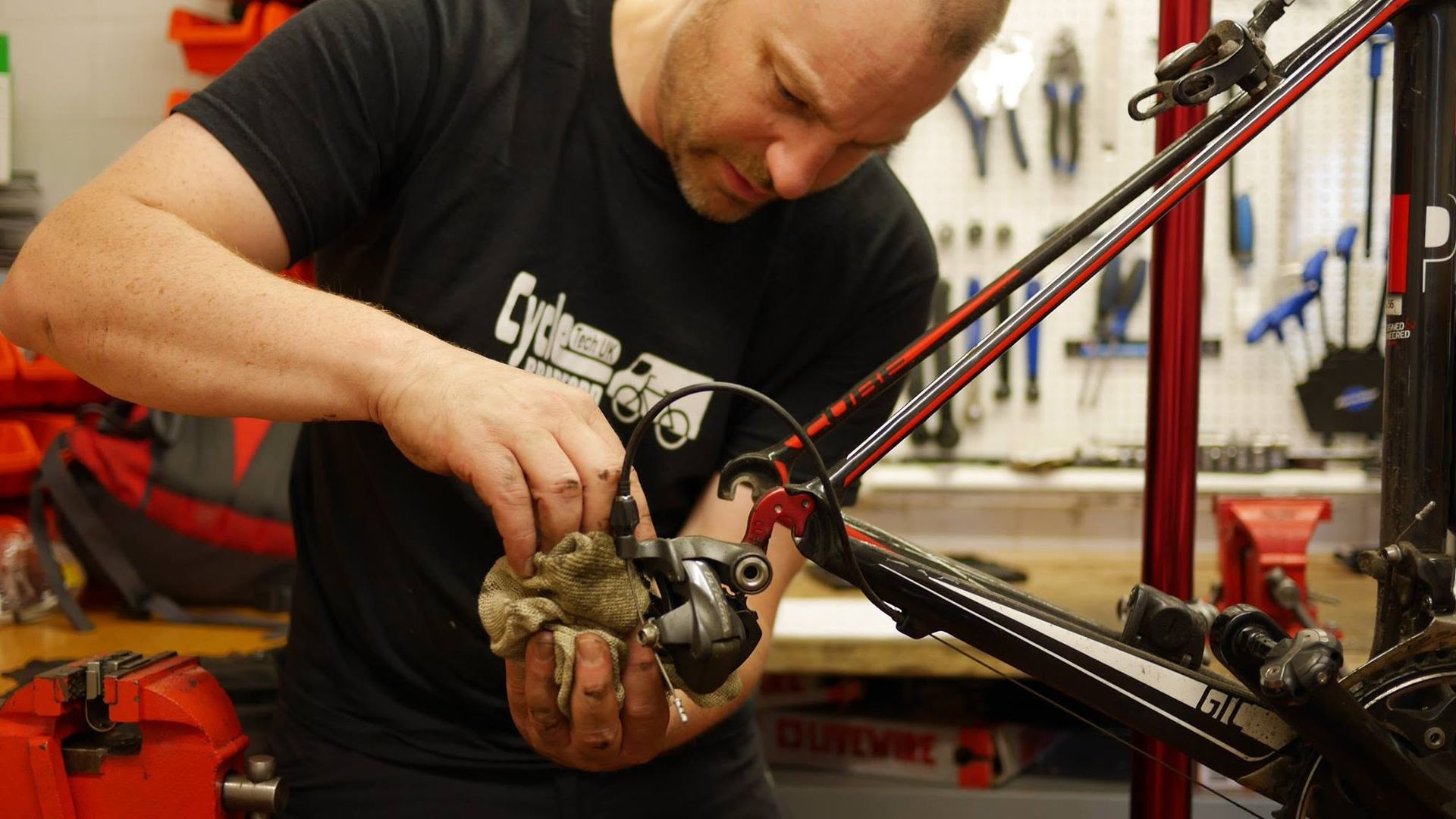
The industry is right to be concerned about attracting and retaining skilled mechanics. Modern bikes and e-bikes require knowledge, training, specialist tools and ongoing technical support.
But recruitment alone won't fix an industry where businesses struggle to make a living.
We need to look at the whole picture: the number of viable bike shops, the growth of independent workshops, mobile mechanics, collect-and-return services, training opportunities, pay and the economics of servicing bikes sold online.
A shortage of mechanics, a shortage of mechanic jobs and a shortage of viable bike shops are three different problems.
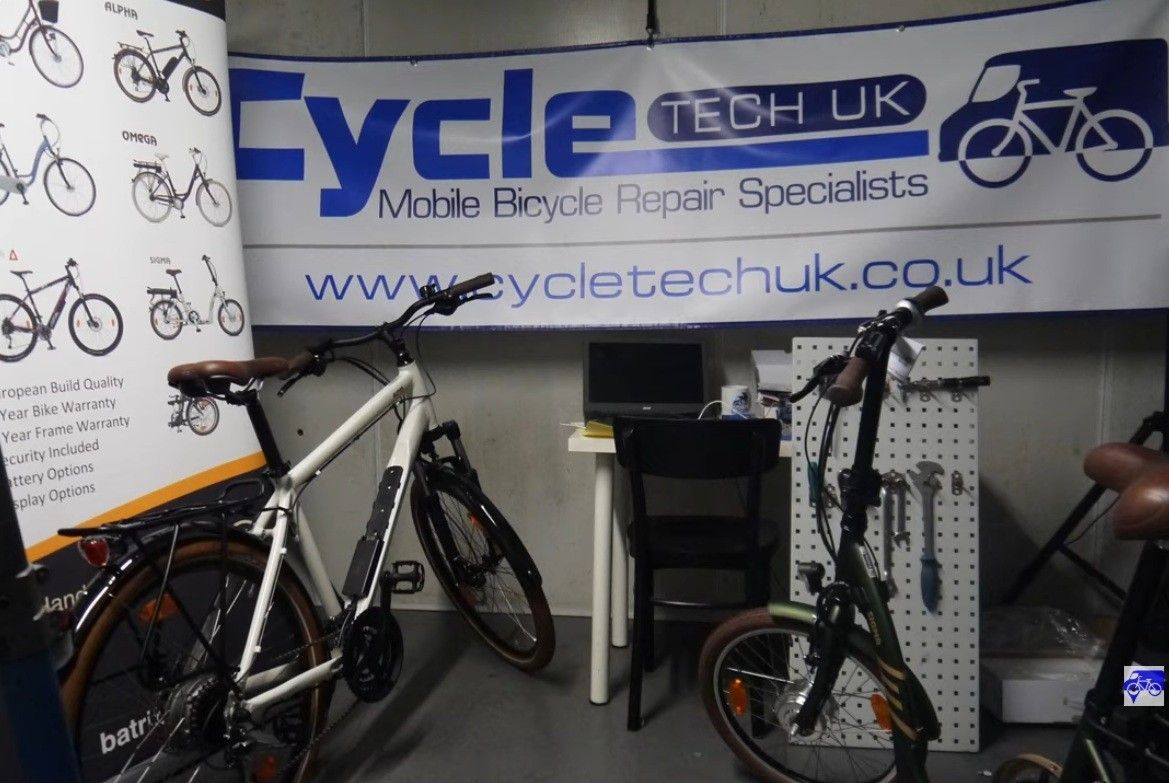
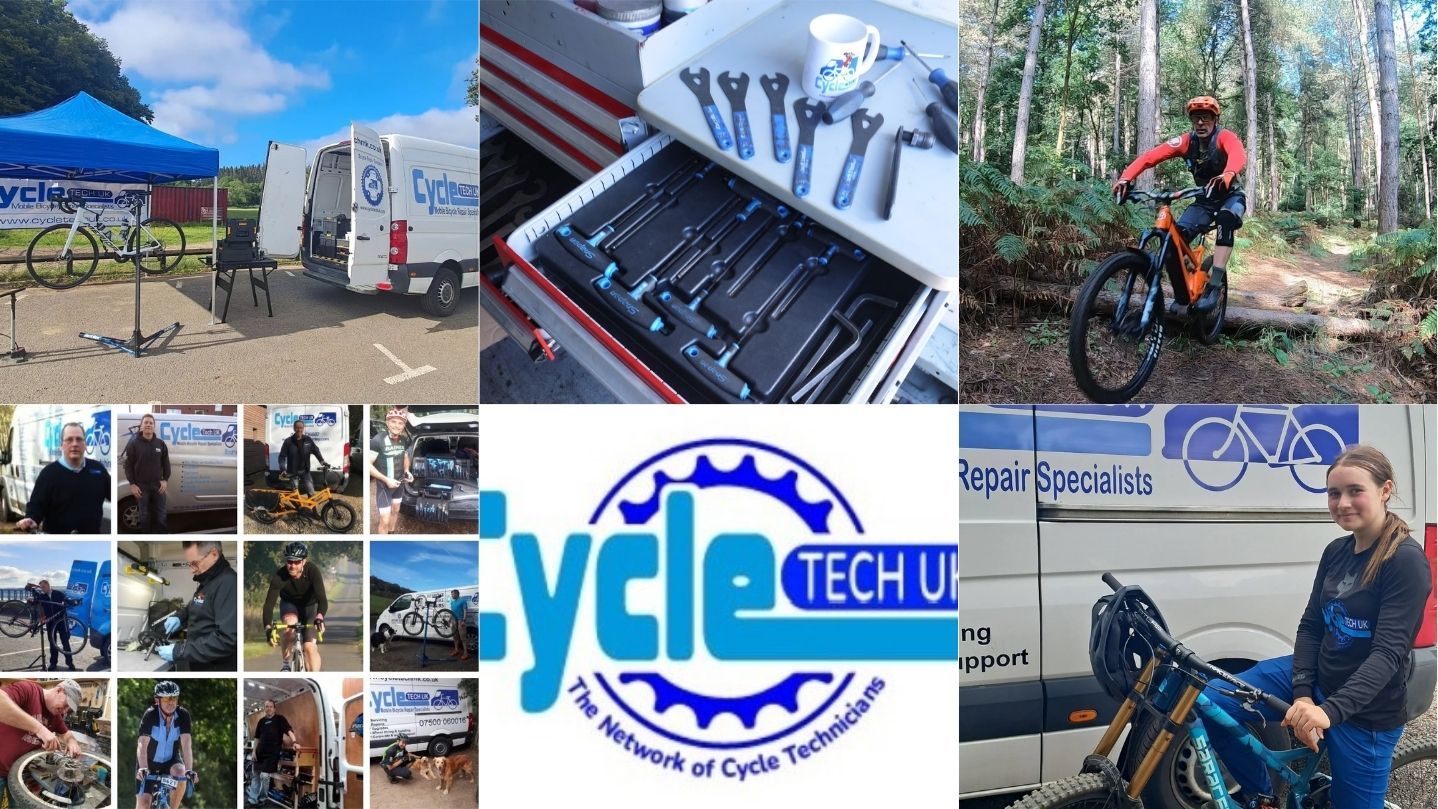
At Cycle Tech UK, we've seen how independent local mechanics can provide servicing, repairs and aftercare without relying on the traditional high-street model. The trade is changing, and we need to recognise the people and businesses already adapting to it.
The mechanic in a well-run bike shop does far more than fix bikes. They talk to customers, recommend products, help sell bikes and represent the shop's brand. A customer might be new to cycling and not know what they need, so having someone knowledgeable to talk to is a big part of the service.
But a bike shop is also a business that can be difficult to sell, particularly in the current climate. If things get tough, or you decide you want to move to another area, it's a big and potentially costly decision.
A mobile business offers a different kind of flexibility. You can start part-time, build it around your circumstances, or move to another area and start again. It's also a business you can continue running into retirement, for as long as you want to keep working.
You don't need to tie up large amounts of money in stock or compete directly with online retailers selling bikes at discounted prices. Instead, you can focus on what you do best: servicing, repairs, customer relationships and providing a service people value.
The financial commitment is very different, too. A mobile business can potentially reach break-even in its first year, whereas a traditional bike shop may take several years — perhaps five or more — to provide a return on the initial investment. Of course, it depends on the business, its costs, location and how quickly it builds a customer base.
It's not about saying one model is better than the other. It's about recognising that the cycle trade has changed, and that independent mobile mechanics offer another way to build a sustainable business without the overheads and risks of a traditional shop.
Over to you — let's hear from the trade.
🚲 Have you seen more bike shops close in your area over the last 10–15 years?
🔧 Have mechanics moved into mobile work, independent workshops or collect-and-return services?
💷 Are wages the main reason people leave the trade, or is the bigger issue the economics of running a bike business?
📊 And before we conclude that the UK has a shortage of mechanics, do we have the figures to understand how many are working across the entire cycle trade today?
I'm interested in hearing from bike shop owners, mechanics, distributors, manufacturers, training providers and anyone else working in the industry.
Let's look beyond the headline and understand what's really happening on the ground.
Riding on our experience! 🚲
— Cycle Tech UK