The Future of the UK Bicycle Trade: 2027, 2031 and 2036
From a mechanic shortage and shop closures to new opportunities for independent businesses.
Riding on our experience!
No one can predict the future. There are too many wild cards, and trends can change. But by looking at the evidence and drawing on our experience, we can explore the opportunities ahead and prepare for what might come.
The bicycle trade is changing. Bike shop closures, pressure on margins, online sales, a growing e-bike market and concerns about a shortage of skilled mechanics are all part of the picture. But there is another side to this story.
What if we look beyond what the industry is losing and start asking what could be created?
What if the future of cycling isn't built around one type of business, but a connected network of bike shops, independent mechanics, online retailers, e-bike brands, holiday parks, hotels, tourism businesses and local communities?
At Cycle Tech UK, we have spent years working at the sharp end of the trade. We understand the realities of running an independent business, looking after customers and keeping bikes on the road. Through our national network of independent Cycle Technicians, we also see how different businesses operate across the UK.
Our view is that the coming years could offer significant opportunities — not just for established bike shops, but for people thinking about entering the trade, independent mechanics looking to grow, and small businesses that could use bicycles and e-bikes to develop something new.
This is not a prediction that every business will succeed, or that traditional bike shops no longer have a place. It is an invitation to look at the changing market with open eyes and consider where the opportunities may lie.
What is happening in the UK bicycle market?
The latest figures from the Bicycle Association show signs of stabilisation after several difficult years following the pandemic boom.
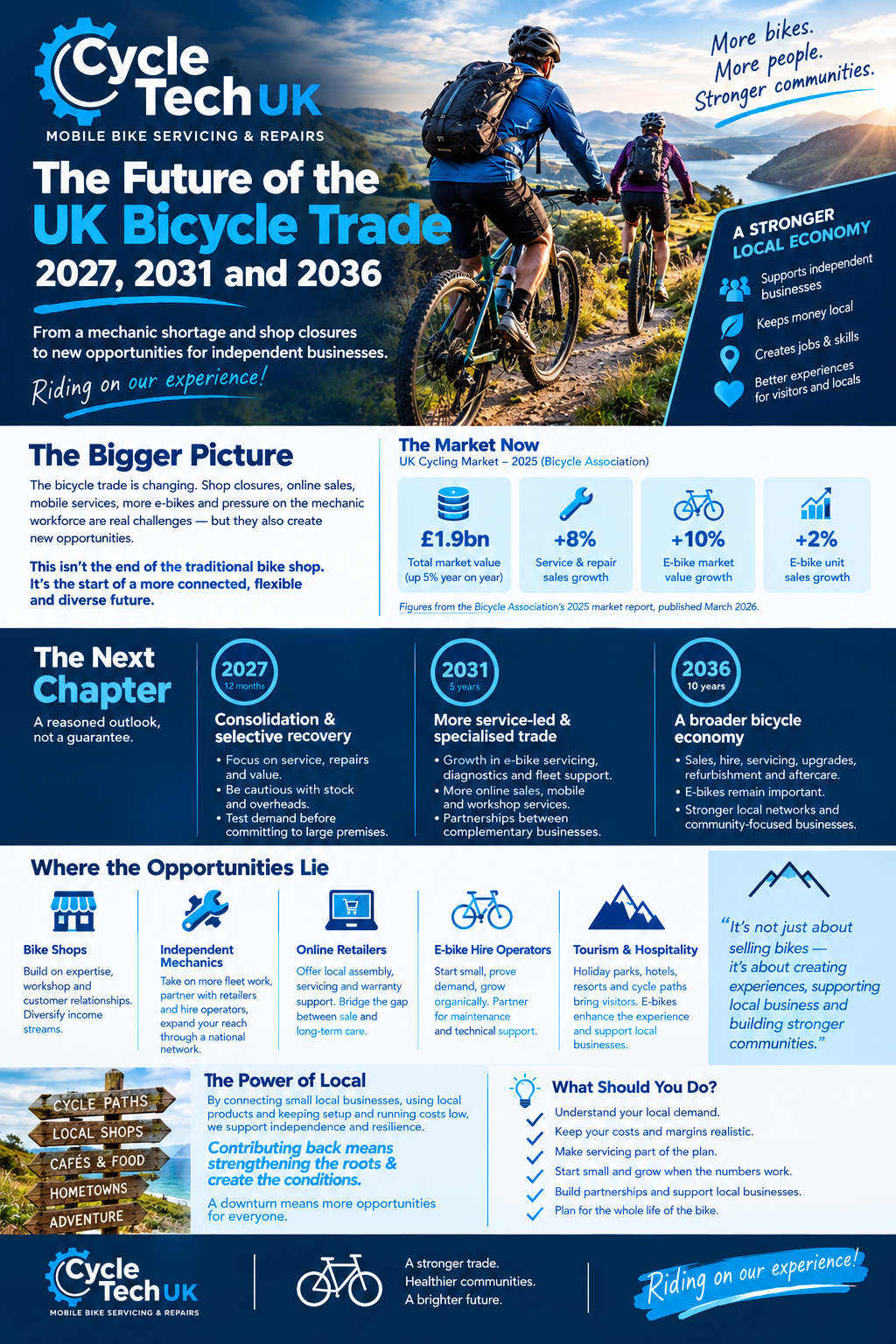
Its 2025 market report, published in March 2026, estimated the UK cycling market at around £1.9 billion, up 5% year on year. Bicycle sales improved modestly, the value of the e-bike market increased, and the value of the service sector grew by 8%.
That last figure is particularly important.
While selling new bikes remains challenging, people still need their existing bikes maintained, repaired, diagnosed and upgraded. As the number of bikes in use grows, so does the need for dependable aftercare.
The market is not simply disappearing. It is changing, and businesses need to understand where customers are spending their money and what they need beyond the initial purchase.
At the same time, the NextGen Mechanics Report 2026 highlighted a significant European skills challenge. It estimated a current shortfall of around 45,000 mechanics across Europe, potentially rising to a need for 105,000 additional mechanics by 2032 when future demand and workforce replacement are considered.
These are European estimates, not a direct measurement of the UK shortage. We also need to ask an important question: is the problem simply a lack of mechanics, or is it partly about the economics of the job, working conditions, training, pay and the ability to build a sustainable business?
From our experience, having skilled people in the right places is only part of the answer. They also need a viable way to reach customers, earn a fair return and keep their businesses running.
2027: A time to rethink the traditional model
For established bike shops, the immediate challenge is to make the business work in the market that exists today, rather than the market that existed during the pandemic boom.
Selling new bikes can bring customers through the door, but stock costs money, margins can be tight, and overheads continue whether sales are good or bad. A business that depends entirely on selling more bikes can be exposed when demand slows.
Servicing, repairs, upgrades, e-bike diagnostics and aftercare can provide a more balanced income. Customers may delay buying another bike, but they still need the one they already own to work safely and reliably.
For someone considering opening a bike shop, the opportunity is not necessarily to build the biggest showroom or carry the largest stock. It may be to start smaller, understand local demand, control costs and develop a loyal customer base.
A workshop-led business, a mobile service, a collection-and-return service or a small specialist operation may be more suitable than taking on a large premises and substantial stock commitments from day one.
This does not mean that a traditional shop cannot succeed. Location, reputation, expertise, customer relationships and sound financial management still matter. It means that new entrants should consider all the available models before committing their money.
The opportunity for 2027 is to build a business around what customers need, not simply around what the trade has traditionally sold.
By 2031: The growth of connected local services
Looking five years ahead, a reasonable scenario is that more bicycle businesses will combine different sources of income.
E-bike ownership brings its own requirements. Heavier bikes, electrical systems, specialist diagnostics, battery care and the cost of replacement components can make competent aftercare particularly important. Mountain e-bikes also operate in demanding environments, where drive systems, chains, brakes, tyres and other components can experience significant wear.
As the installed base of e-bikes grows, the opportunity is not just in selling them. It is in supporting them throughout their useful life.
We could see more businesses specialising in:
- E-bike servicing, diagnostics and repairs.
- Upgrades, bike builds and maintenance packages.
- Support for online retailers and brands that do not have their own local workshop network.
- Fleet maintenance for holiday parks, hotels, resorts and cycle hire operators.
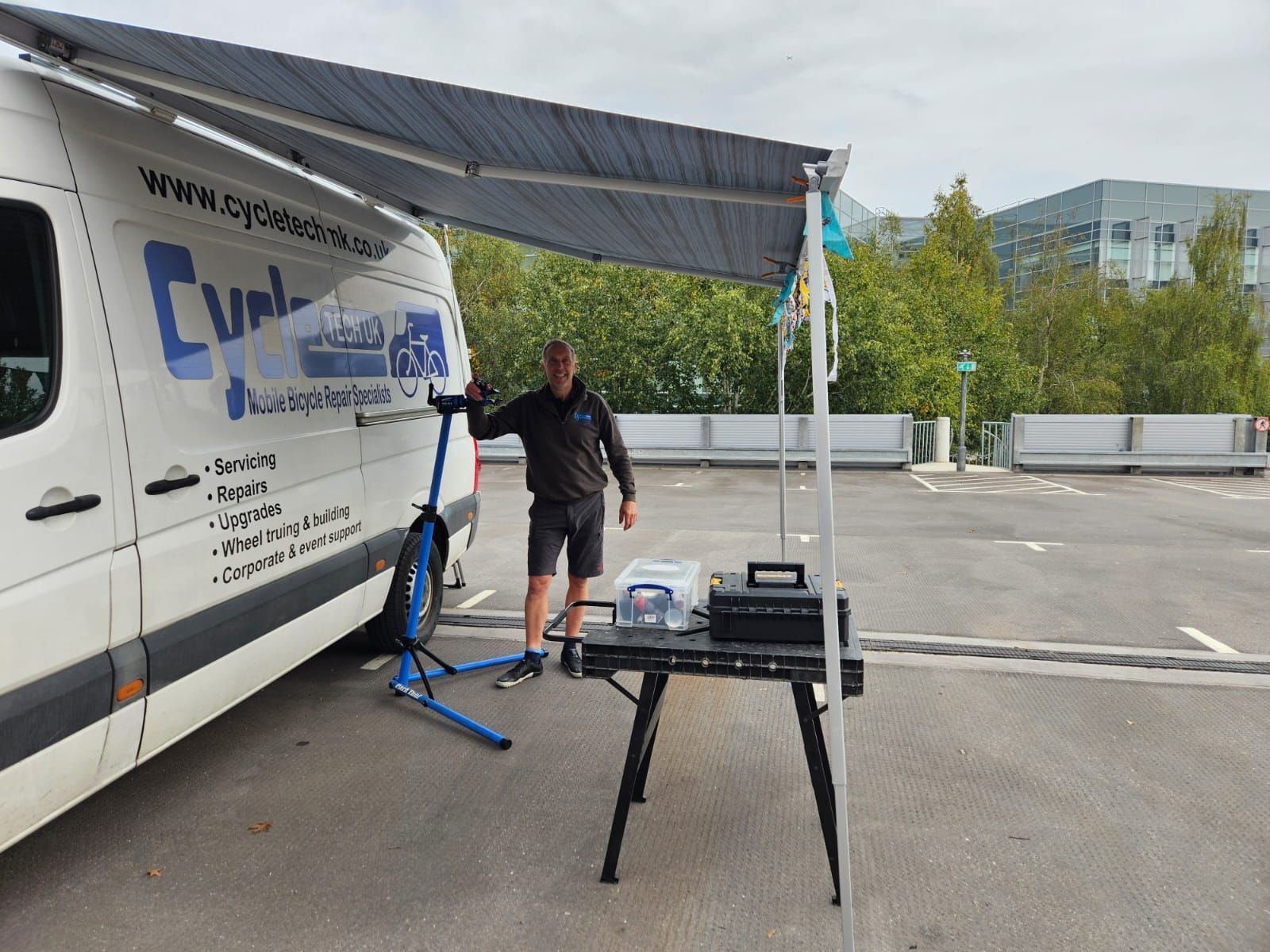
- Mobile servicing for customers who cannot easily transport their bikes.
- Refurbishment and responsible reuse of suitable bikes and components.
Not every business will do everything. The opportunity is to build relationships with businesses that complement one another.
A local bike shop may have a workshop and a retail customer base. An independent mobile mechanic may reach customers who would otherwise struggle to access a service. An online retailer may be good at selling bikes but need local support for assembly, repairs and warranty work.
When these businesses work together, each can focus on its strengths while helping customers receive a more complete service.
By 2036: A broader bicycle economy
Ten years is a long time to forecast. Technology, regulation, consumer spending, infrastructure and the wider economy will all influence what happens.
However, one possibility is a more connected bicycle economy, with businesses earning income throughout the ownership cycle rather than relying predominantly on the initial sale.
That could mean new-bike sales sitting alongside servicing, diagnostics, hire, fleet support, upgrades, refurbishment and aftercare.
E-bikes may help bring cycling within reach of more people, including visitors who want to explore an area without committing to a demanding ride. They can also offer a practical option for people who would otherwise choose a car for certain journeys.
But the opportunity depends on more than the bikes themselves. Customers need safe routes, suitable places to ride, reliable products, accessible servicing and confidence that problems can be resolved.
A bicycle is not just a product. It can be a way to explore, travel, exercise, spend time together and connect with a place.
That creates possibilities well beyond the traditional retail market.
E-bike hire: A different opportunity for small businesses
One area worth watching is independent e-bike hire.
We have seen leasing and finance promoted as ways to increase e-bike sales. These arrangements can work in the right circumstances, but they should not be confused with running a hire fleet.
Employer cycle-to-work schemes remain active in the UK, and European research suggests that customers still use personal savings extensively to purchase e-bikes.
Neither tells us that every leasing model will succeed.
Hire serves a different purpose. It allows people to try an e-bike for a day, a weekend or a holiday without the commitment of ownership.
The strongest opportunities may be in places where the surroundings are part of the experience:
- Holiday parks and campsites.
- Coastal towns and rural tourism destinations.
- Hotels, resorts and wellness retreats.
- Mountain bike parks and trail centres.
- Areas with established cycle paths and attractive routes.
- Local attractions where visitors want to explore further.
Imagine a small independent business starting with three or four suitable e-bikes. The owner tests local demand, works with accommodation providers, learns what customers need and builds the operation gradually.
As bookings grow, the owner may invest in more bikes, extend the season or develop guided rides and local experiences. What begins as a small sideline could become a full-time business.
The owner may also learn to carry out routine checks and basic maintenance, building valuable knowledge of the fleet.
Specialist electrical faults, battery concerns and repairs beyond their competence still need appropriately trained support.
This is where the model becomes particularly interesting. The hire business creates a new local service, while its growing fleet creates regular demand for professional maintenance.
The bikes need to be checked before hire, serviced during the season, repaired when required and prepared for storage or the next season. A breakdown during a busy holiday period can affect both revenue and a visitor's experience.
A successful hire business needs more than bikes. It needs a plan for maintenance, safety, downtime, insurance, theft, depreciation, parts and seasonal cash flow.
Start small, prove the demand, calculate the real costs and make sure the business can support the fleet before expanding.
Supporting visitors helps support the local community
The value of an e-bike hire business does not stop with the person hiring the bike.
A visitor who hires an e-bike may stay an extra night, eat at a local café, visit an independent shop, buy from a local producer or discover a part of the area they would otherwise have missed.
A hotel or holiday park can offer a better experience. A local mechanic gains maintenance work. A small hire operator develops another source of income. Local businesses have a reason to recommend one another.
This is how the benefits can spread.
Rather than every business trying to do everything itself, they can connect their services and help customers discover what their area has to offer.
For example, a holiday park could partner with an independent e-bike hire business, which in turn has an agreement with a local Cycle Technician for routine maintenance and urgent repairs. Nearby cafés, attractions and accommodation providers could recommend the hire service to visitors.
The result is not simply another way to sell or hire bikes. It is a network of local businesses supporting one another.
This can help keep spending within the local economy, create work for independent operators and make a destination more attractive to visitors.
Where Cycle Tech UK fits in
Cycle Tech UK has an opportunity to help connect these businesses with the independent mechanics who can support them.
Our network brings together independent Cycle Technicians across the UK. We do not employ them as a workforce; they run their own businesses and serve their local areas.
That distinction matters. A national network can create wider reach while retaining the local knowledge, personal service and independence that customers value.
Potential opportunities include:
1. Supporting online retailers and e-bike brands
Online businesses can reach customers across the country, but customers still need practical support after delivery. Professional assembly, pre-delivery inspections, servicing, diagnostics and warranty support can help bridge the gap between buying online and owning a bike with confidence.
2. Supporting independent e-bike hire operators
Cycle Tech UK could help hire businesses identify suitable local technicians for fleet inspections, planned servicing, repairs and seasonal preparation. The exact arrangements would depend on location, capacity, technical capability and the needs of each business.
3. Working with holiday parks, hotels and resorts
A venue may not need to employ a full-time mechanic to offer e-bike hire. A partnership with a local hire operator and an independent mechanic could provide access to bikes and maintenance without requiring every service to be built in-house.
4. Creating opportunities for independent mechanics
For a Cycle Technician, commercial relationships can bring repeat work beyond individual household bookings. Fleet servicing, business accounts, retailer support and seasonal maintenance can help diversify income and make better use of available workshop or mobile capacity.
5. Helping established bike shops expand their reach
A shop may have the skills and facilities to maintain hire fleets or support a nearby business, but not have the time or resources to develop those relationships alone. Working with complementary independent businesses can create opportunities without requiring every shop to expand its premises or stock.
6. Connecting local businesses nationally
A business operating across several locations may need a consistent way to access competent local support. A national network of independent mechanics can help make that possible while the work remains rooted in local businesses.
These are opportunities to explore, not promises that every partnership will be suitable. The right model must work commercially for the customer, the local business and the mechanic delivering the service.
At Cycle Tech UK, our approach is practical: understand the need, identify the right support and build relationships that make sense for everyone involved.
What should an established bike shop or new investor do?
There is no single business model that will work everywhere. A shop in a busy cycling destination faces different opportunities from one serving a town with limited cycle infrastructure. A mobile mechanic has different costs from a retailer with a large premises.
Before investing, ask some straightforward questions:
- What does the local community actually need?
- Is there enough demand for sales, repairs, hire or a combination?
- What are the true costs of premises, stock, equipment, insurance, staff and transport?
- Can servicing and aftercare provide a dependable part of the income?
- Is there local demand for e-bike expertise and diagnostics?
- Could partnerships bring customers without requiring more overheads?
- If considering hire, what are the realistic seasonal utilisation, maintenance and replacement costs?
- Can the business start small and grow only when the numbers support it?
A downturn can create opportunities, but it does not remove financial risk. Customers may have less money to spend, businesses may face tighter margins and new ventures can fail if costs are not controlled.
However, a quieter market can also encourage people to reconsider how they work, what they offer and where they can cooperate.
An existing shop might add fleet servicing. A mechanic might develop relationships with local accommodation providers. A small business might test e-bike hire with a handful of bikes. An online retailer might invest in proper aftercare rather than treating delivery as the end of the customer relationship.
The strongest opportunity is not necessarily to invest more. It may be to work more intelligently with what is already available.
Contributing back means strengthening the roots
At Cycle Tech UK, we believe there is a bigger picture here.
By connecting small local businesses, using local products and services where practical, and keeping setup and running costs manageable, we can support independence and resilience.
A local mechanic does not need to own a retail shop to contribute to the cycling economy. A hire operator does not necessarily need a full workshop to maintain a fleet. An online retailer does not need to build a physical branch in every town if it can establish suitable local support.
Each business can do what it does best, while working with others to provide a better overall service.
This is how a different kind of economy can develop — one that keeps communities alive, connected and thriving.
It is also an opportunity to rethink what growth means. Growth does not always have to mean larger premises, more employees or more overheads. It can mean a stronger local customer base, better relationships, repeat work, shared knowledge and more businesses earning a sustainable living.
Contributing back means strengthening the roots and creating the conditions for others to grow.
A well-supported local cycling economy can benefit residents and visitors alike. It can help people access cycling, discover their surroundings, support independent businesses and keep more economic activity within their communities.
And perhaps that is one of the most promising aspects of the e-bike opportunity: not simply that more bikes may be sold or hired, but that they can help people reconnect with places, businesses and each other.
The opportunity ahead
The future of the bicycle trade will not belong exclusively to large retailers, online sellers, traditional shops or mobile mechanics.
It will depend on businesses that understand their customers, manage their costs, develop the right skills and build relationships that make commercial sense.
For Cycle Tech UK, the opportunity is to connect independent mechanics with the retailers, brands, hire operators and local businesses that need reliable support.
For established bike shops, it is an opportunity to review the balance between sales, servicing and new sources of income.
For people thinking about entering the trade, it is a chance to explore smaller, more flexible models before taking on significant commitments.
And for local communities, it is an opportunity to make cycling part of a wider network of independent services, tourism and everyday life.
A downturn can be difficult, and we should never dismiss the businesses and people affected by it. But it can also prompt new ideas, new partnerships and new ways of working.
The question is not simply how we return to the way things were.
It is how we create something more resilient for the future.
Cycle Tech UK — a national network of independent local mechanics, supporting businesses and communities across the UK.
Riding on our experience!
Research notes and sources
The article draws on the latest research discussed above, including:
- Bicycle Association — UK cycling market report 2025, published March 2026. Market value and service-sector trends.
- The Bicycle Association
- NextGen Mechanics Report 2026 and BikeRadar coverage — European mechanic workforce estimates and skills challenges.
- BikeRadar
- Cycle to Work Alliance — 2026 data on employer participation and certificate volumes.
- Cycle To Work Alliance
- NIQ — European e-bike purchase and financing research.
- NIQ
- VisitBritain / Oxford Economics — UK tourism contribution and 2030 outlook.
- VisitBritain.org
- UK National Travel Survey 2025 — cycling travel patterns in England.
- GOV.UK
The outlook for 2027, 2031 and 2036 is scenario-based analysis, not a claim that official forecasts can reliably predict the exact number of bike shops, mobile mechanics or hire businesses. The hire and partnership opportunities are strategic possibilities that individual businesses would need to test against local demand and their own costs.