Beyond the Numbers – Whose Voice Is Being Heard?
The European Cycling Industries (ECI) NextGen Mechanics report talks about a shortage of bicycle mechanics and the need for tens of thousands more across Europe.
But having watched the webinar, I have to question whether we're actually looking at the right problem.
ECI may have members from across the cycling industry, but that doesn't automatically mean it represents the experience or understands the challenges of everyone working within it.
Shouting Europe is already lacking 45,000 to keep up with current demand and Europe needs 105,000 more bike mechanics by 2032 without the context being given.
And this is where I think the report is missing something important.
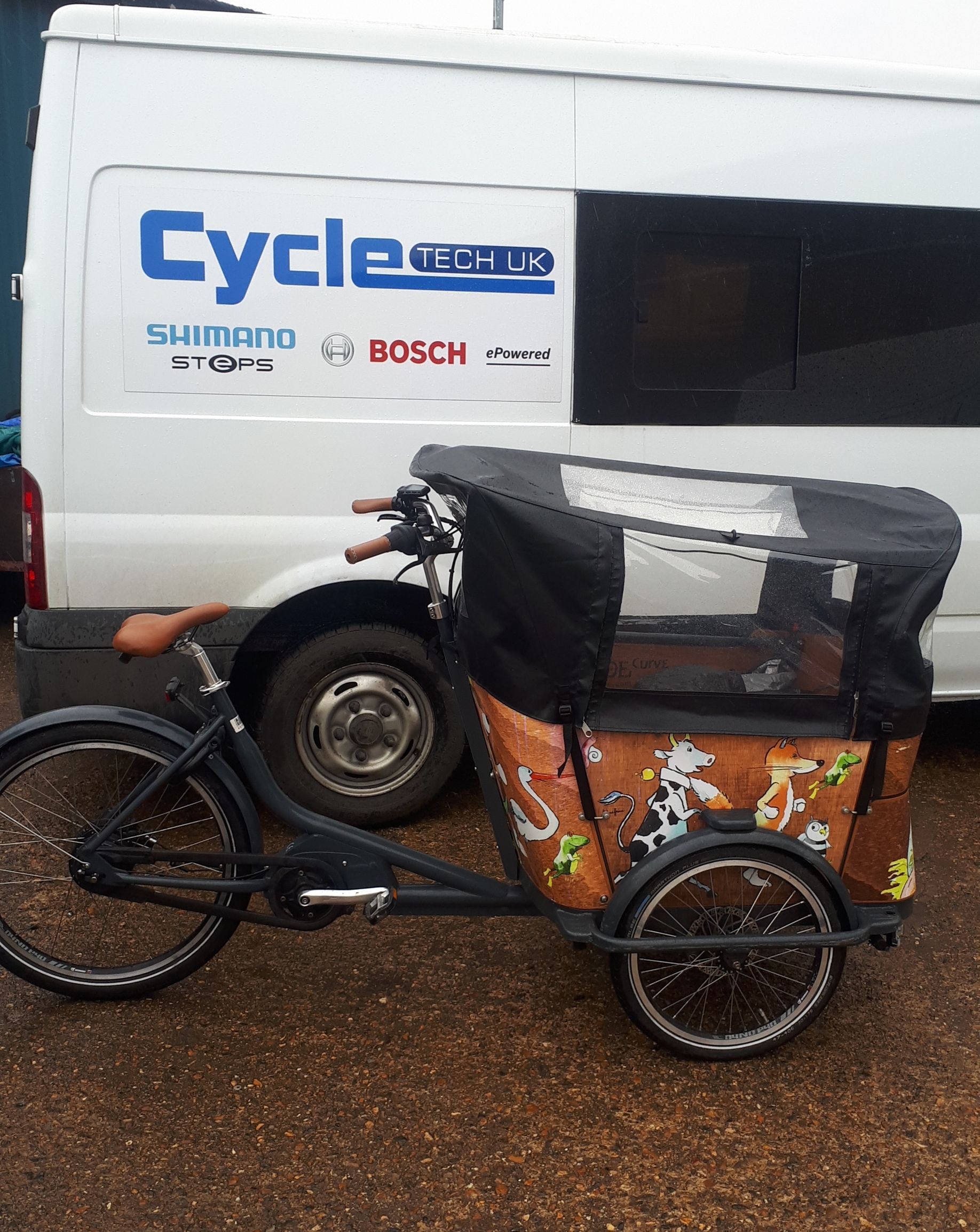
It starts with a cargo bike. But where is the rest of the story?
The webinar refers to logistics companies experiencing problems because they couldn't find enough skilled mechanics to maintain their cargo bikes.
But what actually happened?
- Was there nobody available to visit the site?
- Were local bike shops unable to accommodate large cargo bikes?
- Were the bikes poorly designed or simply not fit for purpose?
- Were they difficult to service, with parts hard to source and poor technical support?
- Was the logistics company prepared to pay the going rate?
- Were mechanics unwilling to get involved because of poor manufacturer support?
- Were parts, technical information and warranty labour available?
And the biggest question we see every day – the customer only calls when there's a problem.
And we ask, “When was your bike last serviced, sir?”
“Four years ago – and I use it every day!”
It's also worth questioning whether customers see servicing as essential, particularly with e-bikes. Should e-bikes be serviced at the manufacturer's recommended intervals, and do customers understand why?
Or is the attitude simply: buy a cheap e-bike to get to work, use it for three years and replace it when it becomes uneconomical to repair?
We are mechanics. We are also detectives.
When a bicycle comes into our hands, we need to understand the whole story. We investigate, diagnose, establish what has happened and work out whether the repair is viable. That's our craft.
You cannot take one example of a logistics company struggling to maintain its cargo bikes and turn it into evidence of a European-wide shortage of bicycle mechanics without understanding the reasons behind it.
In the UK, we often hear that there is a shortage of housing. Yet there are reportedly around 1.5 million empty homes. So is the problem simply a lack of houses, or is it a lack of affordable, suitable housing in the right places?
Perhaps we should apply the same thinking to the bicycle trade. Is there really a shortage of mechanics?
The question is whether we're really seeing a shortage of mechanics, or whether businesses are struggling to afford and retain the skills they need, while individuals and corporate businesses are unwilling to pay mechanics properly for their time.
Read on to find out…
The e-bike boom – the problem nobody seems to be discussing
The high street and many bike shops had been in decline for some time before Covid. In business, this can be like a deer caught in the headlights: seeing change coming but struggling to know how to respond or adapt. Then there's the wild card that keeps being played: buying stock at trade prices, only to see the same bikes advertised online the following week for less than you paid for them.
Lockdown brought a huge wave of e-bike sales. Many customers bought into the e-bike smile, but not everyone bought a bicycle with a reliable after-sales support network behind it.
There are now more e-bikes, cargo bikes and four-wheeled cargo bikes on the road. But not all manufacturers provide the same level of technical support, parts availability, training or warranty backup.
And who gets left dealing with the consequences?
The bike shop owner and the mechanic.
We saw e-bikes taking up valuable workshop space, sometimes with the owner unable to charge appropriately for the time involved.
Parts might be supplied under warranty, but what about the mechanic's labour? If the manufacturer doesn't cover the time needed to diagnose, remove and replace the component, the business is effectively subsidising the repair.
After being burnt by this experience, is it any wonder that some mechanics now choose which brands they work on?
During lockdown, you could almost call it the bike shop bailout. The £50 bike repair vouchers encouraged people to get their existing bikes back on the road, while shortages of new bikes meant retailers were often selling stock at full RRP.
With many people working from home, the usual Cycle to Work demand and commuting patterns changed. Some workers were also furloughed, with the option of staying at home while continuing to receive pay.
For a period, the trade was operating in unusual conditions.
But was this sustainable growth, or an exceptional boost that masked some of the underlying problems?
And yet, poor-quality, poorly supported e-bikes are still being sold through marketplaces such as Amazon. That isn't helping the cycling trade or the customer.
These bikes are often not worth a mechanic's time to investigate or repair. The conversation can end with: "Send it back to where you bought it from." The customer is left to deal with the marketplace, while the local bike shop is left unable or unwilling to help. Amazon has no meaningful role in providing the aftercare that a customer might reasonably expect from a bike retailer.
Bike shops are left dealing with the consequences, often without access to parts, technical information or manufacturer support. It raises a bigger question: who is supporting the bike shop?
The wider cycling trade cannot talk about building a sustainable future while leaving independent retailers and mechanics to pick up the pieces.
Are mechanics really lacking e-bike skills?
E-bikes are not new. The technology has developed, systems have become more sophisticated and new models continue to arrive, but many mechanics have been working on e-bikes for years.
There are mechanics with manufacturer training, diagnostic experience and the practical knowledge to service and repair a wide range of systems.
Of course, there is always more to learn. But experienced mechanics don't start from scratch every time a new model arrives. They draw on years of practical experience, transferable knowledge and the ability to diagnose problems.
Years of experience with your hands on the tools are worth more than a few days in a classroom alone.
Education is often built around a fixed curriculum, testing, screens and schedules. But that's not the only way to learn, nor is it necessarily the most natural. The craft of mechanics comes from getting hands-on, having a go, asking questions, challenging what we've been taught and recognising that there is rarely only one way to do something.
Formal training has its place, and manufacturer-specific training is important. But we shouldn't overlook the skills and knowledge already within the trade.
The bigger question is whether mechanics have access to the technical information, diagnostics, parts and manufacturer support needed to do the job properly.
Being Qualified and Being Good at Your Job Are Not Necessarily the Same Thing
Qualifications have their place, but being qualified and being good at your job are not necessarily the same thing.
A qualification can demonstrate that a mechanic has studied the subject, understands the technical principles and knows the procedures. But does it teach them how to value their own time, price their work, market their business or sell products effectively?
A qualified mechanic can still undercharge, overcharge or provide poor customer service. They may be technically competent but struggle to make a living from their skills.
Qualifications can make someone better informed, and look good on paper, but they don't automatically make them better at the job or better at running a business.
And this brings us back to the NextGen report. Qualified mechanics are already operating in the market, but that doesn't necessarily resolve the everyday problems: getting a customer's bike fixed, having access to the right parts and technical support, and charging a rate that reflects the time, skill and cost involved.
A qualification doesn't automatically demonstrate experience, judgement, commercial ability, communication skills or the quality of service someone provides.
This distinction applies well beyond bicycle mechanics. In almost any trade or profession, qualifications matter — but the real test is what someone can actually deliver.
Perhaps the question isn't simply how many more mechanics we need to train, but what support they need to build sustainable businesses and deliver the service customers are looking for.
At Cycle Tech UK, we're not starting from scratch. Our network has built up the support, knowledge and practical experience over many years, helping independent mechanics develop their businesses as well as their technical skills.
Read: Sharpen Your Skills
Regulation
Allegations that mechanics are operating like 'back-street garages' need to be backed by evidence. Insurance, technical competence and safety procedures are already fundamental to how we operate as professional mechanics. These are matters of professional responsibility, not something that needs to be implied through generalisations about the trade - These are our responsibilities, and we take them seriously.
It suggests to me that some traditional bike shop owners have been blaming online retailers for the decline of their businesses for the past 20 years. Now, mobile mechanics are being viewed as another threat, while the NextGen report raises the idea that the 'back-street garage' needs regulating. Perhaps we need to look more closely at why the trade is changing, rather than continually identifying someone else as the problem.
"You wouldn't change your entire business model to suit one customer. You build a business around the customers you want to serve, the skills you offer and the way you want to work." — So why change the way professional mechanics operate to address a small number of isolated cases involving backstreet garages? Surely our attention is better spent on what we can control: how we run our businesses, the standards we set and the service we provide. Read: A Response to the NextGen Mechanics Report 2026
Not all e-bikes are created equal
Some customers have bought the wrong type of e-bike for their needs.
Heavy, fat-tyre e-bikes and cargo bikes can present different handling, storage, transport and maintenance challenges. Some are simply not economically viable to repair.
A mechanic can want to help a cyclist, but that doesn't mean every repair makes business sense.
We have to consider the value of the bike, the availability of parts, technical support, the time involved and whether the customer is prepared to pay for the work.
Refusing an unsupported or uneconomical repair doesn't necessarily mean there is a shortage of mechanics. It can mean the product and its after-sales support have failed the customer and the repair trade.
Read Electric Bike Service Practical guidance before buying an e-Bike
There are manufacturers who understand the importance of support
Bosch, Shimano, Yamaha, MAHLE and other established e-bike system providers have recognised that the relationship doesn't end when the bike is sold.
From our own experience, Bosch provides a comprehensive support structure for its authorised agents. Shimano, through Madison, has also been very helpful to the trade. Manufacturer-specific training, technical information, diagnostics and parts support make a real difference.
There are also warranty arrangements and, in some cases, assistance with replacement costs for customers further down the line.
This is what a supported e-bike system should look like.
At Cycle Tech UK, we have developed our own network of knowledge and technical support, alongside a library of information I started building in 2008, drawing on my background in the motor trade.
We understand that mechanics need more than a bicycle and a set of tools. They need information, technical support, parts availability and people they can turn to when things get complicated.
So, is there really a shortage of mechanics?
Perhaps there is a shortage in certain specialist areas. Perhaps there are not enough mechanics prepared to work on commercial cargo-bike fleets or unsupported e-bike systems.
But that's not necessarily the same as a shortage of bicycle mechanics.
Before calling for another 105,000 mechanics, shouldn't we understand:
- Why experienced mechanics are leaving the trade?
- Why small businesses struggle to employ and retain them?
- Why some mechanics refuse to work on particular e-bike brands?
- How many bikes are uneconomical or impossible to repair?
- Whether manufacturers are providing adequate technical and warranty support?
- Whether the customer was sold a bike that actually met their needs?
These are questions that need answers before we start prescribing solutions.
The future business model – who benefits?
The webinar talks about exciting future opportunities, including the growth of cargo-bike logistics, shared mobility, and leased e-bikes. That fits with the 15-minute city concept.
These developments could create more demand for servicing and maintenance. But who owns those bikes? Who maintains them? Who pays the mechanic? Who controls the contracts?
There may be significant opportunities for fleet operators, manufacturers, leasing companies and other organisations already positioned to benefit.
But that doesn't automatically mean independent mechanics will benefit.
Are we creating sustainable opportunities for skilled mechanics and independent businesses, or simply creating a workforce to support somebody else's business model?
The webinar ends with the statement:
"There are going to be exciting positions and high wages for skilled mechanics."
It's an appealing message, but where is the evidence?
Who will employ these mechanics? What will they be paid? Will they be employed directly, contracted through fleet operators or supplied through funded training programmes?
Forecasting a shortage of 105,000 mechanics is easy. Understanding why existing mechanics are leaving, why independent businesses struggle and why some repairs are no longer commercially viable is much harder.
Mechanics are not simply a resource to be supplied to the industry. They are skilled people, running businesses, carrying responsibility and taking commercial risks.
We need sustainable businesses and fair pay today, not just promises about exciting jobs tomorrow.
The bigger picture
I respect the manufacturers and organisations that genuinely support the trade. But the cycling industry has changed, and the business models that worked yesterday don't necessarily work today.
We need to recognise independent workshops, mobile mechanics and the different ways people now access bicycle servicing.
At Cycle Tech UK, we've learnt by getting our hands dirty, picking ourselves up when things go wrong, and supporting cyclists along the way.
You can ride on our experience.
That experience is what we bring to every rider.
Don't be the last to know.
Recognise your own worth. You are needed more than you realise. You're doing this job to make a living, but it's also about serving the customer, sharing your knowledge and, for many of us, doing something we genuinely love.
Don't underestimate the value you bring to cycling. You have more influence over your own future than you might think.
You can start deciding what that future looks like today.
Don't give up. It's easy to become complacent when you hear the same story repeated over and over again: poor wages, a shortage of mechanics, and e-bikes will somehow save the trade.
But repeating the same problems doesn't make them go away, and waiting for someone else to fix them won't necessarily change anything.
We need to recognise our own value, take responsibility for what we can control and help shape our own future.
My challenge to ECI
If you're going to research the future of bicycle mechanics, speak to the people who actually do the work.
Don't just count mechanics. Understand the work they are being asked to do, the products they are expected to repair, the support they receive and whether the business is viable.
ECI is a membership organisation, and its members have commercial interests in the cycling industry. That's not inherently wrong. But we should ask whose interests are being served when problems are identified and solutions proposed.
The future of the cycling trade shouldn't be designed around mechanics without mechanics having a meaningful say in it.
You cannot solve a problem properly if you haven't understood what is causing it.
Watch the webinar. Read the report. Ask questions.
I'm not dismissing the need for skilled mechanics or better training. I'm challenging the narrative, the evidence and the conclusions being drawn.
But perhaps there's another question we should be asking as independent mechanics: Do we actually want to be involved in shaping this future, and if so, what does meaningful involvement look like?
Because there is a difference between a shortage of mechanics and a shortage of bicycles that can be properly supported, maintained and repaired.
Rely on yourself, not on a system that leaves you poor in spirit.
The ECI, manufacturers and industry media are not our bosses, and they are never higher or lower than a business owner or a shop mechanic. We should be treated as equal voices in the future of the trade.
"We need to work together as a community and take responsibility for our own future. While keeping an eye on the wider concerns, we should focus on what we can control: doing the best we can and serving the cyclist." - From The Founder Cycle Tech UK